Spring Planting

On this sunny weekend in the Puget Sound, I decided it was time to plant my starts outside.

I’m pretty proud of starting all of these from seeds in my garage. A few years ago I started working with a grow light so I could plant seeds rather than buying starts. It is too cold in the January / February time frame to put seeds outside around here. I could have done them in the house instead, but a) I have found they get less temperature shock going from garage to outside and b) cats. Little cat would eat them and big cat would have no problem knocking them over.

If I could only grow one thing, it would be tomatoes. They are a must have in my vegetable garden. This year I planted four tomato starts, and I’m hoping we have a big enough harvest to make and can tomato sauce. However, with the way I eat tomatoes I’m not counting on it.

In the big planter we also have brussels sprouts and three tomatillo plants. We usually make a big batch of Verde sauce with the tomatillos and can all except one meal’s worth. It is my favorite enchilada recipe – not claiming authentic in any way – and growing my own tomatillos is just another excuse to make it.

Asparagus on the left (year 4) and basil on the right.

We always try to have at least one basil plant. Either we use it fresh as needed or dry it to use over the fall months. You can also see the asparagus coming in nicely. Those were also grown from seed, and we patiently waited the recommended two years before harvesting any of them.
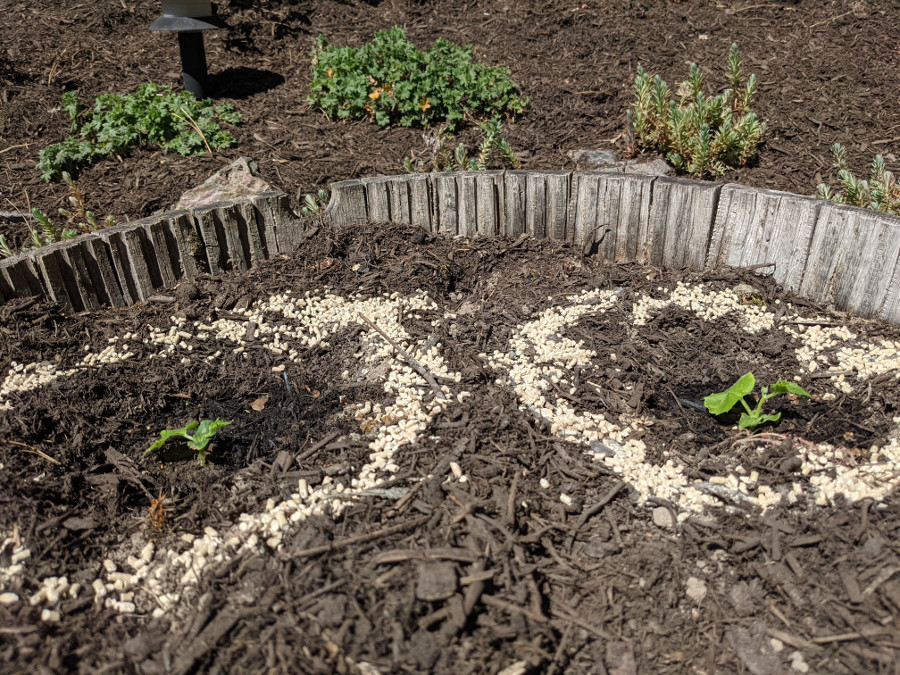
Cucumber plants!

Finally, we have my pickling cucumber plants. I tried to grow these last year, but they did not take for me. I’m hoping I can harvest enough with these two little starts to get a few jars worth of pickles. I mentioned in the pasta sauce post that I like canning, so now you see I was not joking. I’m sure as summer comes and goes this year I will have more canning posts for you.

Enjoy the weather!

Welcome Little Cat

More than a year after Fluffy Cat passed, and working from home during the pandemic, we decided it was a good time to bring home a friend for Big Cat. It turned out everyone thought it was a good time to adopt kittens during the pandemic, so there were none available for a few months.

While I fully support adopting older cats, Big Cat is not in agreement with that thought. I tried to save a stray years ago. He demonstrated how territorial he is by refusing to allow that cat anywhere near the litter box. We ended up adopting the stray cat out to my parents and learned adult cat adoption was off the table with Big Cat ruling the house.

Eventually I found this energetic ball of fluff to adopt, and she paid zero attention to Big Cat’s unhappy rumbling as she flew and stumbled around the house. I said I would not get a long-hair cat again, but she is mostly only medium hair length. The spunk and those adorable ear tufts were also too cute to pass up.

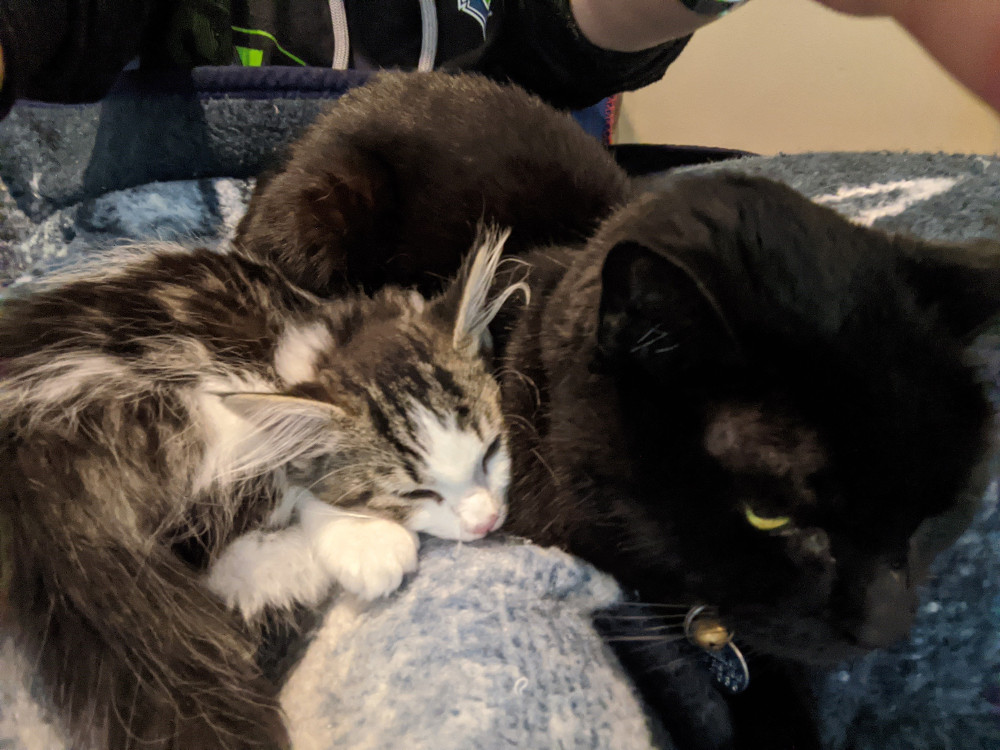
After a few days Big Cat warmed up to her enough to allow her to curl up beside him.

She would play with Big Cat by attacking and pouncing on him. He, of course, did his unhappy growling and just sat and stared at her. After enough pounces he would rise up and smack her down with one paw in a WWE move. Little Cat thought this was fantastic and after a moment would get up to start the play fighting all over again.

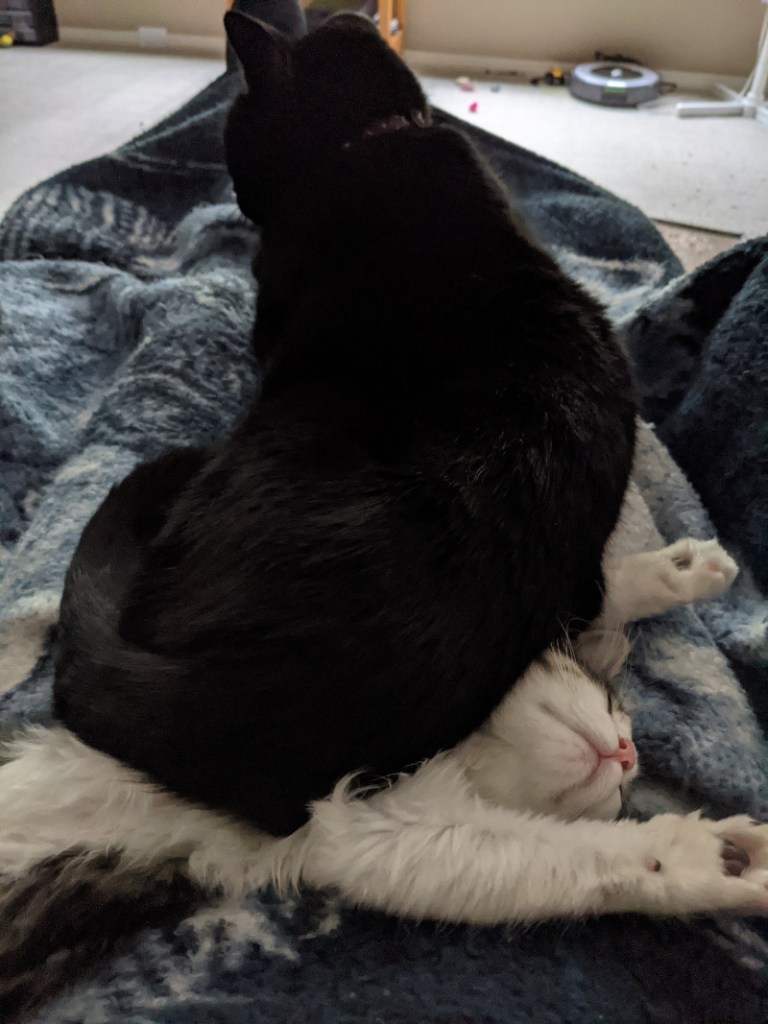
Big Cat had enough of her taking over his lap space.

I’m just glad Big Cat is an energetic 16 years. They play cat chase in the middle of the night and sometimes during the day. He tolerates her sleeping curled up next to him because she is warm and that makes it acceptable. He will not share the cardboard boxes or the Cat Cave though, so clearly we need at least two of each scattered around the house. It is absolutely worth the clutter. Welcome Little Cat.

Alpha Readers – Requirements May Vary

Initial feedback from the beta reader experience has shown me that my expectations for alpha and beta readers are not entirely accurate. It also showed me that my research and the information out there on these two roles is not entirely consistent. Before I expand upon my own thoughts, focusing on alpha readers, information I researched came from these sources:

Catherine Milos’s summary is the closest to my own experience and expectations in the comparison between the two roles with this description (I encourage you to take a look at all the articles):

  • “Alpha Readers assist writers by offering a reader’s perspective for a manuscript after an initial draft. The manuscript often has not been edited. It’s not uncommon for an Alpha to read before the author edits the first draft.
  • Beta Readers assist writers by offering a reader’s perspective for a manuscript which has been edited and is shortly due for publication.”

Some of the articles call out that alpha readers look at your manuscript from the perspective of a writer, looking for plot holes and writing issues. While beta readers look at it from a reader perspective looking for what they like and do not like.

My Findings on Alpha Readers

My greatest area of confusion in my first run through this process is around editing. I plan to hire a copy editor for my book before publishing, so I was not as concerned with that aspect before requesting beta readers. I have someone I consider my alpha reader looking for plot holes and character development issues. Upon rewrite I do another review for editing purposes. Unfortunately, I have read my own work so many times that some grammar is just overlooked. This was more of a distraction for some of the beta readers than I initially anticipated.

I know copy editing is not my strength, so I need to adjust my process to compensate. This includes adjusting how I approach alpha and beta readers to better accommodate my style and skills. My sister is my first reader, and will continue to do so. While she will also be a beta reader, I call her my first reader as well because she takes a look at my rough draft. This is the draft where I jump from scene to scene and do not have the secondary characters as well developed as they need to be. The first read for me is: Does the story work? Which characters are standing out and which are bland? What are the big plot holes or world building aspects that are not making sense? These give me some broad brushes to fill in when I go for the initial rewrite to smooth out the rough edges in preparation for a true alpha read.

The second step for me is the alpha reader. First lesson: I need more than one. No matter how much feedback hurts, it is a growing kind of pain. Second lesson: I need alpha readers with complementary skills. I have enlisted my husband for this, as he and my sister have a good combination of skills between the two of them. She will be looking more at plot, characters, world, etc. He will focus on conflicting descriptions, grammar, and clarity. I will be looking for a third as well, and likely a critique partner, but alpha readers need to be people you trust. They read something rough, and you need people who can work with you to build something and not tear you down while doing it.

With this learning, I’m looking at another round of beta readers for this book after incorporating the fixes from my new alpha reader and the first round of beta readers. I appreciate the three of them working with me on this round. It was my first time submitting for a beta read, and they were willing to push through that. The feedback and advice from experienced beta readers has been much appreciated.

I will not go into the beta reader process too much here, as there is a lot of advice on beta readers already out there and easy to find on the beta process. To summarize my findings on getting to that stage: Know your own strengths and weaknesses and your writing process. Tailor your alpha readers to your process and to have complementary strengths with you and with each other. Finally, unless you know your beta readers well and they are not concerned with grammar, make sure your manuscript is clean of obvious errors before you move to the beta reader stage.

Still on track for publication this year!

Pickiest Cat in the World

At least the pickiest cat in my world, anyway.

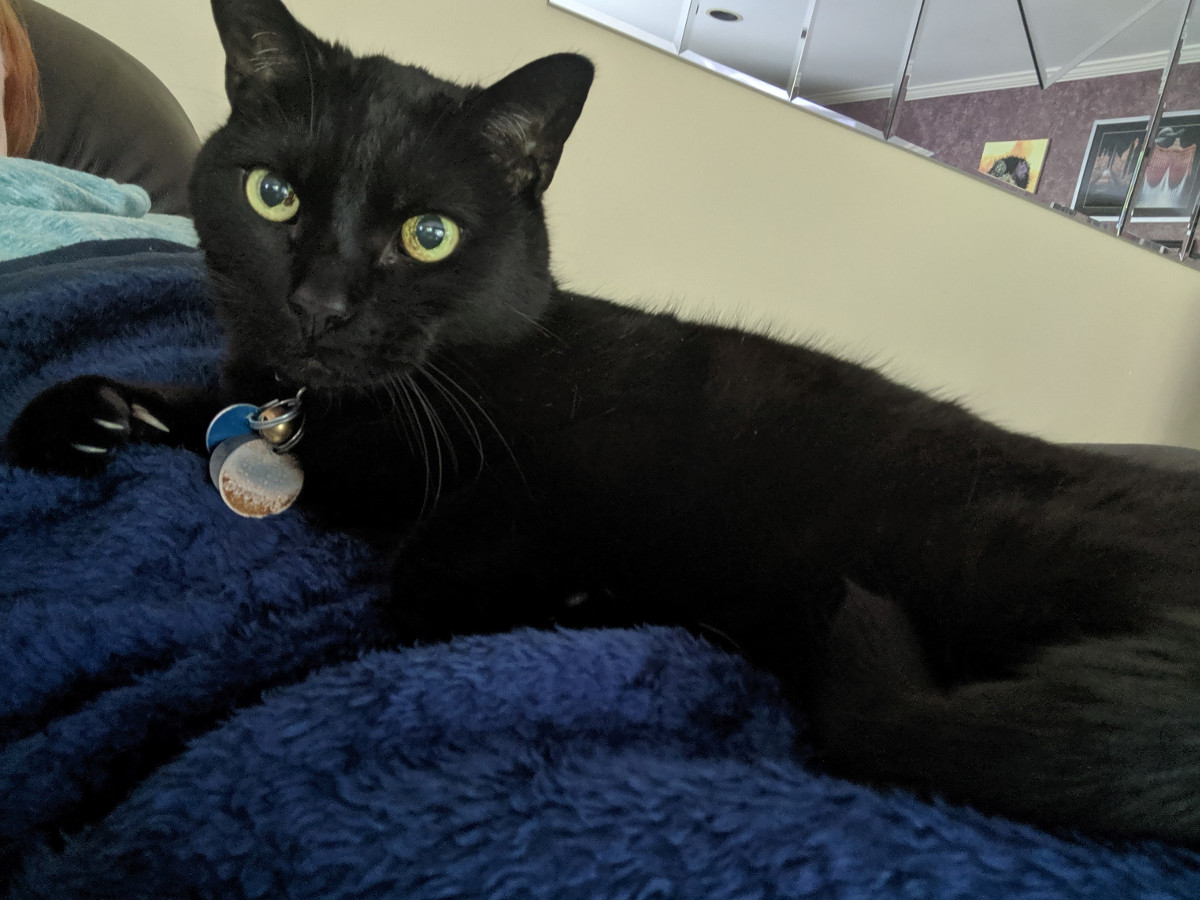
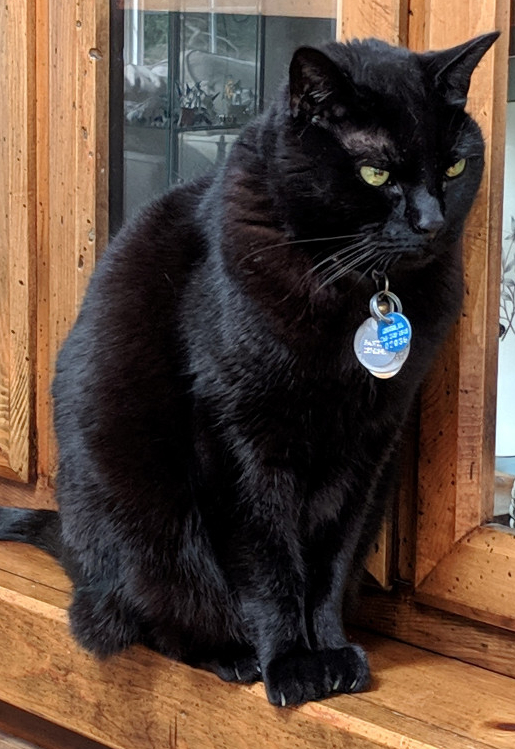
Meet Big Cat. He has been my constant companion for the majority of my adult life. I adopted him when I was in college, and that is the reason he was also our first indoor cat. I knew he would be moving out with me within a few years, and I would have been devastated if he ended up lost after a move. He is now 16, and still romping around like a kitten.

So, why do I call him the pickiest cat in the world? A handful of years ago, after Fluffy Cat became a tripod due to bone cancer, she started to put on weight, but Big Cat still only ate a little at a time, more grazing throughout the day. I started to feed them less more often, but I needed the little that Big Cat ate to have more protein in every bite, so I switched out the kibble (gradually, yes) to achieve this careful cat feeding balance.

For a while, it worked really well. Fluffy Cat started to get healthy, and Big Cat maintained a healthy weight…until he did not. He started to drop weight, and got sick more often, but it was just on water. Vet found no infections and blood work was fine, but Big Cat was on a hunger strike.

That bald spot over his eye is the result of him not eating for a week. Don’t worry, it grew back.

We had no idea what was wrong, but my husband asked if it might be him not liking the food one day when he sniffed and then stuck his nose up at the freshly poured kibble. I quickly went out and bought the old food, willing to try anything. He started gobbling it up the moment we poured him some when I got back, and we had to make sure to pace him so he would not simply get sick again.

His pickiness took on another level after an infection last year, about a year after Fluffy Cat passed. He was getting sick multiple times a day, and we ended up having to give him medicine. Even on an appetite stimulant he would only sniff and nibble. Still getting sick in the mornings, so we tried shifting to more aromatic can food. Mostly he would lick around the bits for the gravy.

I’m pretty sure Big Cat is now incapable of eating like a normal cat. He can still eat kibble, but only in the afternoon. Morning has to be softer, and I diligently water down some pâté for him so he can smush it around the dish with his tongue, managing to eat about a quarter of it at a time, then meow at me thirty minutes later because he is hungry again and wants to smush it around some more.

He does better with the bisque…yes, bisque for cats. And we buy him the bisque because we are suckers for his constant mrrts and hilarious sprints around the house about once a day. He promised me at least five years after Fluffy Cat left us, and I’m going to bribe him with bisque if that is what it takes to get all those years.

Cover Art Reveal

The art for my first book is complete! Another step on the journey to publication. There will be additional iterations along the way, as I will need changes for physical books and might need adjustments for the final uploads to digital publication, but I’m checking this off for now.

To share a little about the process, I previously mentioned I reached out to three artists and was waiting on timelines and quotes. After selecting artist Jonathan Lebel, we started communicating more about what I was looking for in the image. I wanted a figure with a sword in a forest, with the forest showing subtle signs of going through a drought. The forest would be more of the focus than the figure.

I helpfully provided a detailed example of what I imagined it would look like.

First cut, I had to change the figure a bit, as the wings needed to be larger to fit with the story. Now she is wrapped up in them fully like a wrap dress or chainmail. We also went back and forth on font a few times, as this was about the book and not the art, so we needed the title to pop out at you. The first font selected also looked more like a romance novel, so we ended up changing that out.

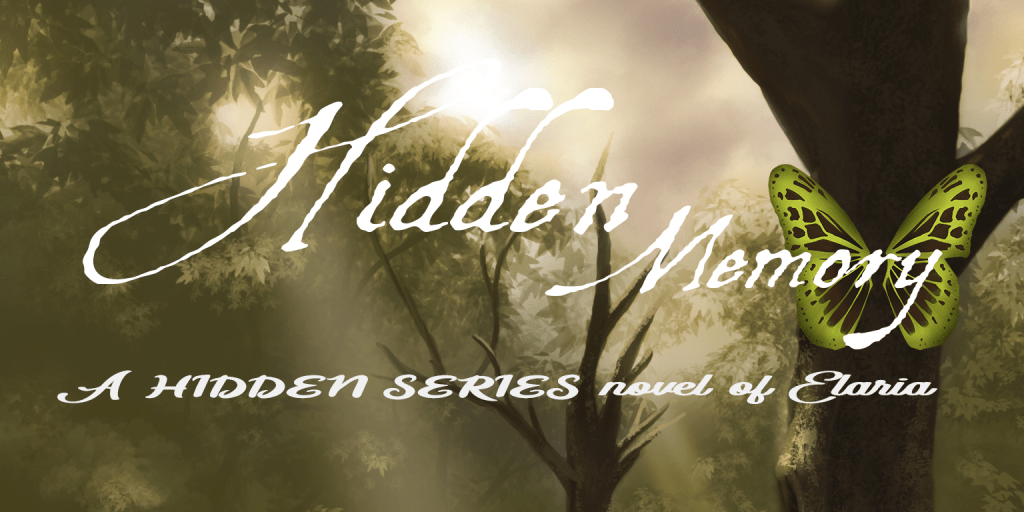
The original flowy font had my test group (friends) thinking romance novel.

I researched other novel covers. The layout, the font(s) used, and the colors are all very important, as a cover is part of the book advertising. If I had to highlight only one lesson learned from this process, it would be to do more research about covers up front to determine more than only what I want the image to look like. The positioning and fonts used are just as important, and I will have more specific preferences for them at the start when I do this again.

I ended up going to Font Squirrel and searching for the Cinzel fonts for my cover. This is a font available for free download and use at &Discover. I described the font as striking with elegance when I was sharing it with my test group. The change was amazing and I loved how it fit the theme I was going for much better than before.

A big thank you to artist Jonathan Lebel for working with me on this cover. You can see his work on ArtStation at this link, and I’m sure it will not be difficult to spot the images that had me reaching out to him. He also provided the butterfly wings you now see at the top of my website pages. Should you happen to pick up my book once it is out, you can read all about those wings. More goals for 2021!