Writer’s Block

In honor of NaNoWriMo, I set a word goal of 32k this month, which is about twice my usual monthly target. I checked my progress through the eighth, and I was running behind by about a hundred words per day. The next few days went pretty well. I made up some ground and at least hit my daily goal for the next five days. Then, instead of life getting in the way, writing itself became a challenge. 

My Process

I have my world and character information in a program on both my main computer and our—very old—laptop. This allows me to reference names and descriptions when I bring them back into the story later, as long as I have taken the time to record the information when I first write it. Having the information on both computers also gives me more freedom in where I write. 

I prefer to sit out with my cats. Who wouldn’t!? One of those lap desk trays I could position over the lap cat would be helpful, but I make it work. 

On the laptop, I open a new Word document, save it with a title for the section of the story I’m working on, and type away. When I finish a chapter or two, I spend time on my desktop computer to record information and do the work needed to move the section over to my main document. The task is more than just copying and pasting. 

I use AutoCrit to help me find improvement areas, so I first copy the chapters to the online program. The Grammarly add-on finds the obvious grammar mistakes, so I run through fixing those first. Then I run the AutoCrit reports to identify where I’m too passive, my dialog is too complicated, or I’m repeating words and phrases too much. 

I do not fix everything. This is a first draft, which means I will be revising and rewriting a fair portion of it after my alphas get through it, so I steer clear of striving for perfection. Even the final draft that goes out will never be ‘perfect.’ Trying to write the perfect book only means you will never publish it, so the advice is always to do what you can within reason and get it out there. 

I’m mentioning this process here because the transfer days always take longer than I want, and they take away time from writing more. I could write straight through, but that would kill my progress in December, which would only delay the problem. I’m not beholden to any deadlines or targets for my November goal other than my own drive, so I think it is better to keep my rhythm consistent.

Challenging Week

So, I’m running behind after the first week and sticking to my transfer days. I had a good five days. I could still do this. 

Then. Brain splat. 

I pushed through a tough Monday, but then came a chapter that was NOT working for me. The scene is fuzzy in my head already, and it only becomes more inane as I push through it. Why is this in here? What is the point? Does this sound as dumb as I think it does?

No. Because. Probably. But the chapter is short, and it feels like something should be here. 

So, I pulled out a tool I saw mentioned early in my publishing journey and used brackets. Brackets are these guys: [ and ]. You do not—usually—see brackets in fiction writing, so they are a great, searchable placeholder. 

For the chapter that was not working for me, I wrapped it up quickly and added “[I don’t like this one, fix or remove].” to the end. I also started using this when I did not want to make up a new name for someone. Like “[new dwarf] entered the room.” I search and replace most when I do the transfer, and I will have all of them fixed and out of the manuscript before it goes to beta readers. The bottom line: if you don’t yet use brackets when something is missing, I highly recommend it. 

I’m still trying to finish this rough draft of the final book in the series. The end is so close I can feel it within reach. Then it is off to revisions based on alpha feedback on Hidden Promise!

Emotional Scenes

How do you write emotional scenes? I have seen this question on social media a few times, and it has me thinking about how I feel working through my books.

My emotions tend to bleed over in both directions. The bleed is less often from my life to my stories, but if I am feeling a high level of stress, my writing becomes more scattered. A common way it presents is by me missing my word goals by becoming unfocused and easily distracted as I’m pulled in a million directions at once or simply want to be done with all things computer for a while. High stress or distraction can also hinder the “good bleed” from the story to me, making it more difficult to relate to and feel my characters’ emotions.

There are scenes in each of my books that have strongly resonated with me as I wrote them. I chuckled in giddy delight at some clever quip a character made. I cried with them over a devastating loss. Feeling those emotions with them helps me articulate the moment, to put into words everything they are going through to help the reader experience it with them.

Finale

I’m close to the end of the last book (first draft) in the Hidden Series, and I’m feeling a little emotionally numb. So are my characters. There has been so much effort and coordination, so many reunions tempered by loss. One way or another, the end is near. They need and want this so much, but the event itself is difficult to speak about because even a victory is unlikely to end well.

How do you keep going when you’re exhausted and drained? How do you move forward when every step spells the death of another friend? How do you overcome your terror when failure means destruction?

You go a little numb. You chip away at your sanity and hope what remains at the end is still a person. You pack it away and do what needs to be done, hoping your ability to make rational decisions has not become compromised.

Drama Queen

So, that’s how I write emotional scenes. I get into the same frame of mind and feel at least a fraction of what I imagine my characters are going through. I laugh with them and cry with them. Then, when I’m polishing that first draft, I look for where the emotional bleed pulled me far off track, and I buff out the rough edges. In the end, I hope you also relate to my characters enough to laugh and cry with them too, because I put them through the wringer.

TikTok Test

I decided to give the TikTok platform a concerted effort for a while. My goal is a month with a video at least every other day. It has been about two weeks, and I’m waffling on the value.

On the positive side, the tool is well set up and easy to use. There are some advanced techniques, like smooth transitions, that I will never be good at using. However, basic edits and enhancements are relatively straightforward. This includes adding sounds or stickers, adjusting video clip length, and adding text or captions. Oh! And effects. The visual filters are fun to explore.

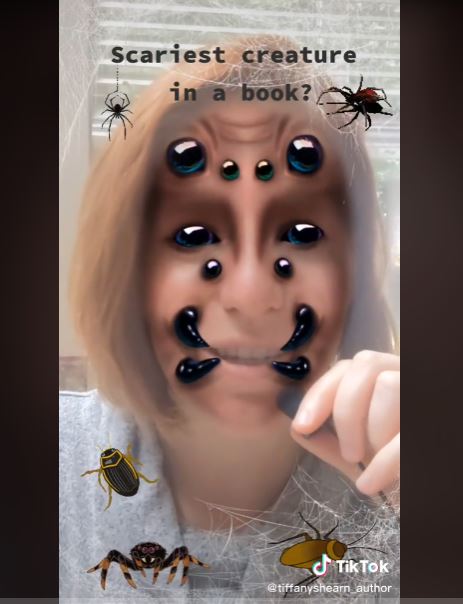
This is my most popular video yet! It is one of my Halloween-ish-themed posts.

Link

Unfortunately, this medium takes time and creativity. Some time requirements are related to the learning curve, but even discounting that they are a production. I can probably make two or three videos for each weekly blog post. That puts the effort at about equivalent to two blog posts each week.

It might not seem like a lot, but that is about six hours a week I cannot spend writing and editing. The creative side also takes a toll. I need to constantly come up with new ideas for a form and format with which I am not comfortable. Performing for an audience or in front of a camera has never been my forte. I always feel like a goof.

With that said, publication is a business, even if it is very personal for the author. I need to do a cost-benefit analysis for everything I do. Production (writing more books) comes first. Presentation is second, including cover art and blurbs. Finally, don’t forget about promotion. Marketing, advertising, self-promotion, and social media fall into the category.

So, why do it? Because Tiktok is the social media platform of this generation. On top of that, BookTok is huge. It revitalized the paperback industry and catapulted indie authors further onto the writing scene. As with any social media, it is far from perfect, and you need to be careful what you internalize from it, but authors need social media presence.

Till Tok has the potential to be big. If you have a video take-off, you could see sales shooting up as well. Do I continue putting in the time and energy here, hoping I can make it big despite my lack of skill in this area? Probably, but I don’t think I will continue daily posts. Maybe two a week. I only hope the change does not doom my account to the algorithmic pits.

If you want to check out my first attempt at a transition video, I’m going to dry doing one today, so check my account later today or tomorrow! As always, thank you for your support, and if you have time to leave a rating/review on Amazon, I appreciate each one.

Elaria – Elven Woodlands

I previously shared some general information about the elves and their society. You can find that post here. In it, I highlight how crucial the royal line is regarding the elves’ connection to their Woodlands. For today, I will be sharing more about the various woodlands. 

As the elves slowly explored Elaria, they made additional connections to the land. While each Woodland was by no means homogenous, the elves drawn to each place often had similar physical characteristics. This frequently helped elves who did not feel the same depth of connection to their birthplace find their home Woodland from among the others. 

Auradia 

The Auradian Woodland was the first, the origin of the elves. Centrally located on the continent, it bordered the Claw Mountains to the north, savannah to the west, plains to the east, and forest to the south. Elves spread to explore those nearby lands. Their presence made the natural foliage grow strong and lush, and the elves lived plentiful lives. 

Initially, the elves only had skin in tones of gray with dark hair and bright eyes of blue or green. To this day, most Auradian elves have gray skin with undertones of green or blue. As the first Woodland, however, it has disproportionately more diversity than the others. The Auradian elves also see more spontaneous diversity in their children. They have a larger population and bear more children than the others, and more elves leave the Auradia Woodland to find their true home than the number entering.

Gray of skin, blue of eye.

Considering these factors, some elves believe that if the Auradia Woodland were lost, all the elves would eventually fade from the realm.

Derou

The Derou Woodland was the first to be founded by elves traveling from Auradia. It is to the northwest of Auradia, bordered by forest, mountain, desert, and savannah. The warmer weather near the desert made the Derou a veritable oasis with plant life variety unmatched elsewhere in the world. With this bounty, the Derou became the source of several medical discoveries and advancements in their initial years and beyond.

The first to strike out on their own.

Elves initially drawn to the Derou were those with dark gray skin trending toward reddish undertones. Over time, this distinction became more pronounced. Most Derou have skin ranging from very dark to light brown, often with red or gray undertones, and hair and eye colors within a similar spectrum.

Satersa

The Satersa Woodland was founded just after the Derou in lands to the south of Auradia. The new Woodland sat nestled among rolling hills leading toward the ocean. They produced strong wood and fabrics.

Satersa elves had skin tones ranging from blue-gray to yellow-green and had hair colors as diverse. Some called them the “river elves” based on their coloration. These tones have since returned to the Auradia or gone to the Palonian, shifting with the destruction of Satersa.

When the gilar emerged in Elaria, they did so in the southern part of the continent. As they spread across the coast, the Satersa faced an unexpected enemy. They were quickly overwhelmed. The Heartwood was desecrated by the gilar, the royals died in the conflict, and refugees fled to their kin.

Lost. Gone from the realm.

Despite mounting a counterattack, the Heartwood was never reclaimed. The surviving Satersa eventually began to age and die. Children with a direct lineage to another Woodland sometimes survived by making another essential connection to their secondary ancestral land. Since the tragedy of Satersa, the elves have taken precautions to protect and defend the Heartwoods and the royal line of every remaining Woodland.

Travelers, elves who feel drawn away from their homelands, frequently have features drawing back to the Satersa. Blue or green eyes or skin undertones are some of the most common features shared among these elves. The prevalent theory is that these individuals would have belonged to the Satersa Woodland had it not been lost.

Palonian

The Palonian Woodland is the youngest of the four. Its founding was barely a couple of thousand years before the vampires and fairy emerged in Elaria. Situated to the northeast of Auradia, the Palonian sits between two major rivers with plenty of farmland amid the scattered forests.

Last to emerge. Strongly influenced by their predecessors.

Palonian elves have skin tones like oak or maple wood with red or yellow undertones. These pale tones often came with brighter hair and eye colors. Bright red, blond, or chestnut hair. Jewel-bright blue, green, or hazel color eyes. Most of the initial Palonian came from either the Satersa or Derou. These origins still show in the greens and browns prevalent in the appearance of many Palonian elves.

Common

Despite the differences in appearance and distance between them, there is little difference between their societies. They share people and resources in need and work together as stewards for the lands between and around their Woodlands. As more races emerged, the elves did their best to welcome or defend against them as their nature allowed. Though the land under their influence shrank, the elven core remains strong and steady.

You meet some of the Derou in Hidden Memory and explore the Palonian Woodland in Hidden Sanctuary. Also, if you love the books, don’t forget to take a moment to go to Amazon to leave a rating/review. Thanks for your support!

Inspiration

At the Renaissance Faire, I was often asked “what other authors are your books like?” and “what books have inspired you?” I need to get better at answering these questions, but the answers are complex and not well-formed in my head. Some of this is the wealth of possibilities, and some is personal hang-ups. 

Works of Inspiration 

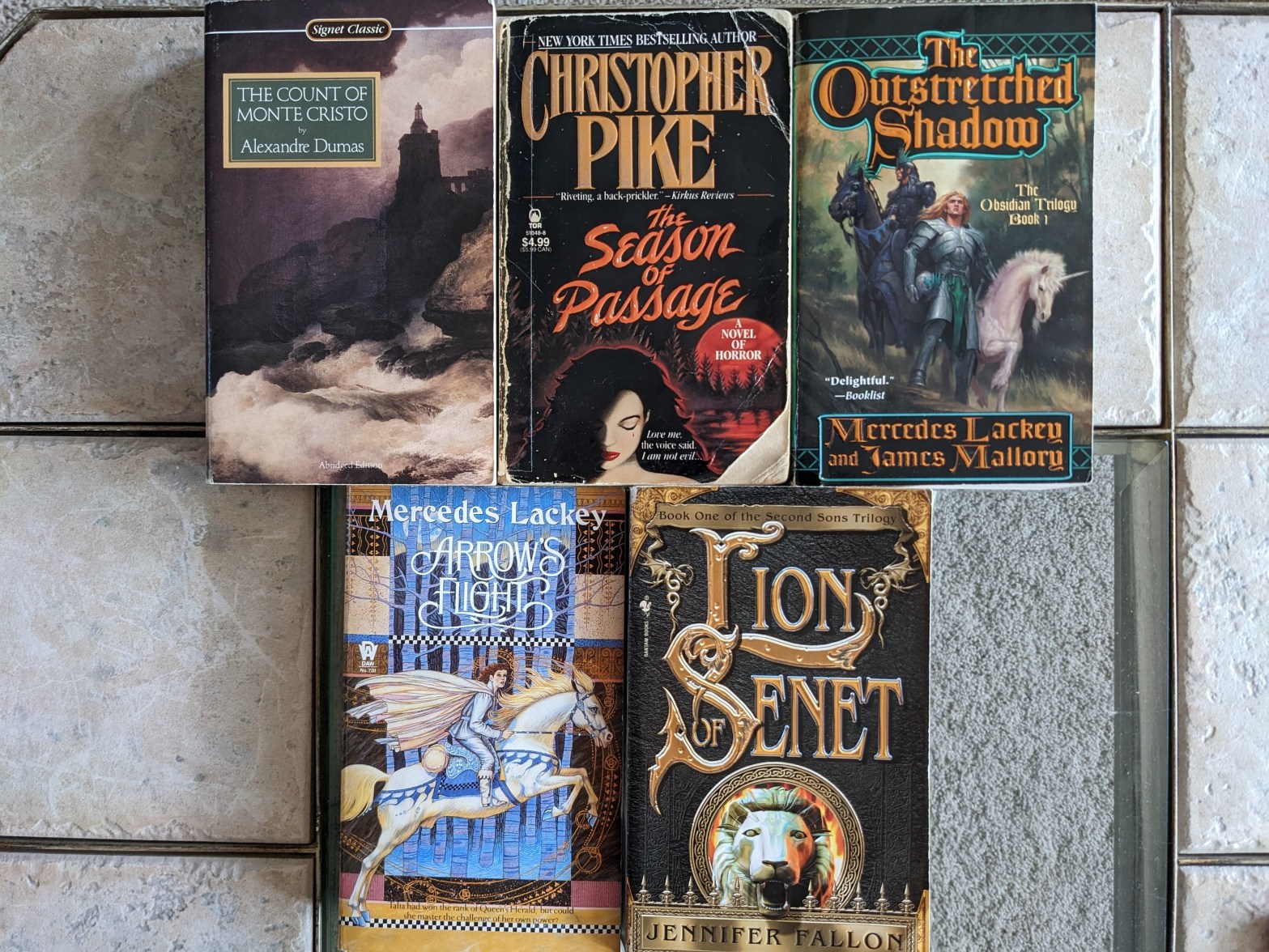
I grew up reading a variety of fiction. Peter Benchley and Michael Chrichton were a couple of my favorite suspense authors. My young adult reading was dominated by Christopher Pike and fantasy reading by authors like Mercedes Lackey and Carol Berg. I also tried to read at least one classic each month, sometimes more if they were novellas. 

While I read a few Goosebumps, Pike was my favorite of the two main options for that target audience age. The Last Vampire series was an amazing arc in his YA offerings. I also loved his adult novel The Season of Passage. Sci-fi, fantasy horror? Yes. I was obsessed and must have read the book at least twenty times. 

On the more general fantasy front, I read—and loved—Lord of the Rings, but not until later; around when the first movie came out. Earlier, I was reading series like the Arrows trilogy by Mercedes Lackey. I consider Lackey “old-school, easy” fantasy. This is my made-up term meaning I see her playing more to the presence of a driving force of “good” without deep or confusing intrigue. I love this. It helps you escape into

another world, you love the characters, and you look forward to the ending. Some of my other favorites from her are the Five Hundred Kingdoms books, the Herald-Mage trilogy, and the Obsidian Mountain trilogy she wrote with James Mallory. I also enjoyed her YA Hunter series.

Here are a few of my other favorites:

  • Carol Berg: the Rai-Kirah series and The Bridge of D’Arnath series
  • Jennifer Fallon: The Second Sons trilogy and Hythrun Chronicles
  • Anne Bishop: Black Jewels World and Tir Alainn trilogy
  • Trudi Canavan: Black Magician trilogy and Age of the Five trilogy

There are more I am forgetting right now. If I remember more this month, I will share for National Book Month on my various social media accounts.

One final note on some of my favorite books growing up regarding the classics I read. The early sci-fi books like Frankenstein and some by H. G. Wells were entertaining reads. I liked The Picture of Dorian Gray1984 has one of my favorite quotes—I say “quote,” but it is really an entire paragraph. Finally, my favorite of all the classics I read is The Count of Monte Cristo. Fantastic story. I have read it multiple times.

Where I Fit

Considering the varied influences, it is no surprise that my first series is not written for a particular market. The core of the Hidden Series developed in my mind throughout my college years. Larron’s appearance was 100% influenced by my super-crush on Orlando Bloom.

While there are LotR elements in my books, I don’t think I can say “If you loved LotR, then you’ll enjoy the Hidden Series.” It might be a little like Mistborn, but lighter on the intrigue. It has some similarities to the Lightbringer series, but again not enough for me to call it out. Maybe The Dragon riders of Pern or Trudi Canavan’s works? Those feel closer, but still…

Part of my hesitation with comparing my books to more well-known works is that I am comparing myself on some level to those authors. Imposter syndrome rears its ugly head, and I know I could never be good enough.

It is not true. With the comparison, I am attempting to reference the type of story a reader can expect. Experienced authors were not always as skilled as they are today, either. I don’t know that I will ever think of myself as great, but I think I’m pretty good. That is an accomplishment for me when it comes to confidence.

Your Favorites?

I have shared several of my favorites here. What are some of yours? What did you read growing up? What about now? Let me know here, or on one of my National Book Month posts on social media.

For those of you who have read and enjoyed my books, let me know your favorite part, or leave a rating/review on Amazon. As always, thank you for your support!