Elaria – Origin of the Fairy

This post contains minor spoilers for Hidden Promise, and I recommend holding off reading further until you are caught up with the series so far. It is also my first foray into creative writing in about a month, so please bear with the rusty attempt.

Origin

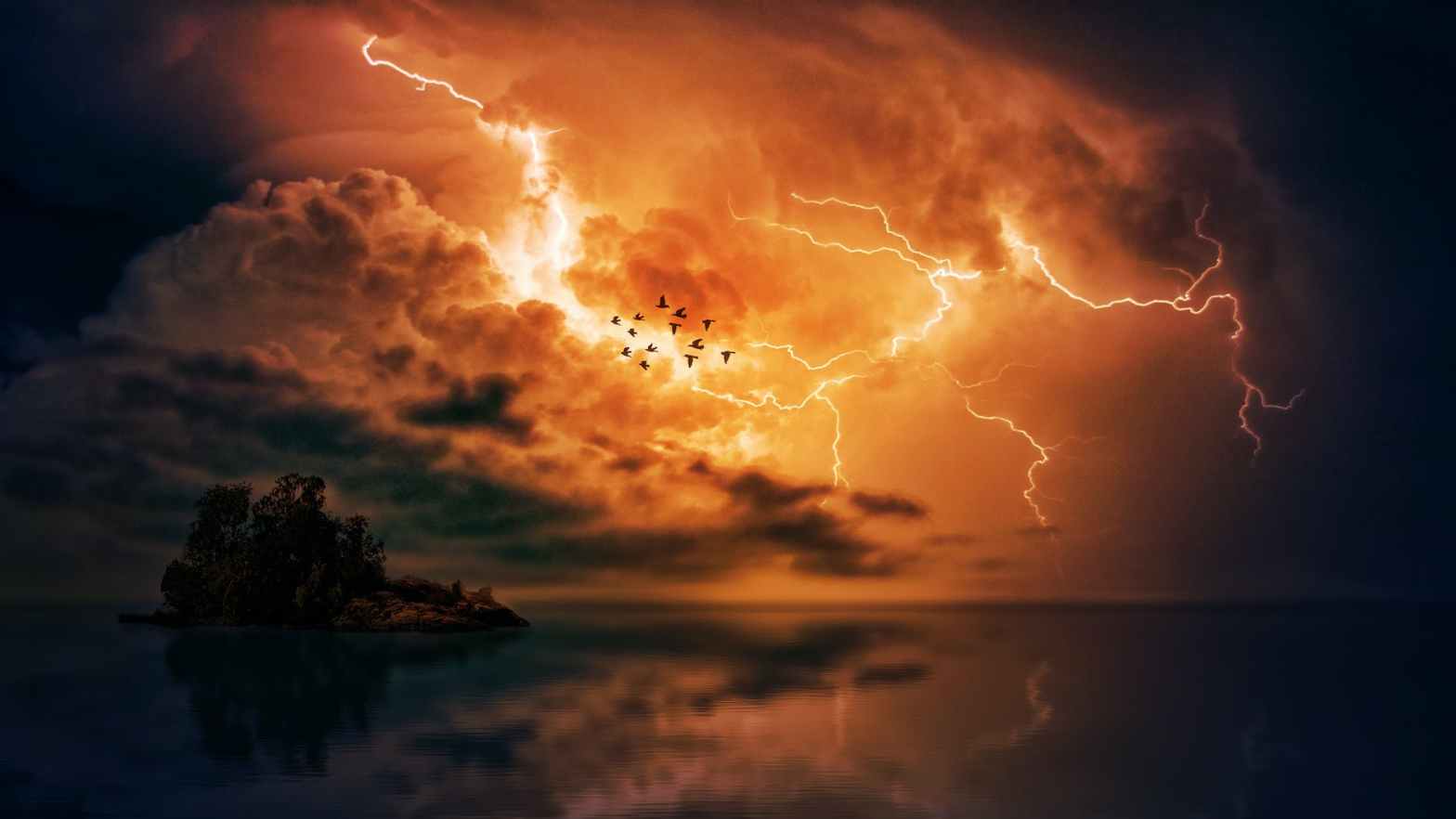
Between the balance of vampires and fairy in Elaria, the vampires emerged first. In the east and south, an airborne menace swarmed far and wide each night, devastating the surrounding landscape. Storms raged through the air and over the denuded ground. Animals fled, rivers ran dry, and fires raged after lightning strikes.

Ripples ran through the realm, and it shifted, and adapted. Points of calm appeared around the chaos, gentling the atmospheric turbulence. The fairy had evolved.

The weather disturbances were merely the first stage of the conflict. As the storms calmed, the people clashed. Vampires and fairy filled the skies, vying for control, establishing strongholds, and spreading through the realm.

Upon their emergence, the fairy had greater numbers. It had worked for the gilar to counter the elves. Unfortunately, the greatest weapons of the vampires overmatched the fairy, and the fairy numbers slowly dwindled away. They did not possess the brutal-minded aggression of the gilar and were not inclined to attack the vampires unprovoked.

Infighting among the vampires initially saved the fairy. While the fairy built strong communities, the vampires fought for control of their colonies. The insect and bat wings clashed, both subjugating their prisoners until the two types integrated so much that they became one.

Both the gilar and elves stood firm against vampire incursions and held their territory. Skirmishes with the gilar set the vampires back further. The gilar proved highly resistant to the vampire’s venom and highly motivated toward revenge. Sometimes the fairy came out victorious in a confrontation with the gilar, but those occasions were, more often than not, followed by significant retribution. The hubris of the vampires and aggression of the gilar bought the fairy time.

Migration

Through the centuries, the fairy migrated and spread across the realm. They sought places to call their own, flying far and wide. The vampires followed, always.

The fairy trained to defend themselves. They created weapons to combat the threats of fighting their balance. None of it saved them, not enough. Vampire venom had a devastating impact on any fairy struck by it. Within hours of being clawed, a fairy would fall ill, becoming weak, shakey, and sweating. In a day, after suffering even a minor injury, half the fairy would be dead, and only half survived. Even with the precautions they took and the defenses they developed, the fairy faced destruction. They could not continue to defy the odds, nor escape into the far reaches of the continent. There was nowhere the vampires could not follow.

Disappearance

In the mountain ranges to the north and east, battles raged. Over the ocean to the south, vampires and fairy fought and fell. The fairy became desperate and withdrew into defensive positions around their disparate settlements. While the elves wondered at the extended silence from the friendly race, the fairy leaders sought radical solutions. One woman found a solution.

She went away, disappearing for a time before returning with a promise: her life, and all to follow in her line, in exchange for the protection of her people. She would sacrifice and live a life of solitude, and the fairy could disappear into their newly established sanctuaries.

Seven islands of safety, the sanctuaries connected on an essential level while remaining physically remote. No one could leave, but no threats could enter either. The protector of the sanctuaries went into hiding, and the world thought the fairy were lost. All that remained of them were stories and legends.

Elaria – Elven Woodlands

I previously shared some general information about the elves and their society. You can find that post here. In it, I highlight how crucial the royal line is regarding the elves’ connection to their Woodlands. For today, I will be sharing more about the various woodlands. 

As the elves slowly explored Elaria, they made additional connections to the land. While each Woodland was by no means homogenous, the elves drawn to each place often had similar physical characteristics. This frequently helped elves who did not feel the same depth of connection to their birthplace find their home Woodland from among the others. 

Auradia 

The Auradian Woodland was the first, the origin of the elves. Centrally located on the continent, it bordered the Claw Mountains to the north, savannah to the west, plains to the east, and forest to the south. Elves spread to explore those nearby lands. Their presence made the natural foliage grow strong and lush, and the elves lived plentiful lives. 

Initially, the elves only had skin in tones of gray with dark hair and bright eyes of blue or green. To this day, most Auradian elves have gray skin with undertones of green or blue. As the first Woodland, however, it has disproportionately more diversity than the others. The Auradian elves also see more spontaneous diversity in their children. They have a larger population and bear more children than the others, and more elves leave the Auradia Woodland to find their true home than the number entering.

Gray of skin, blue of eye.

Considering these factors, some elves believe that if the Auradia Woodland were lost, all the elves would eventually fade from the realm.

Derou

The Derou Woodland was the first to be founded by elves traveling from Auradia. It is to the northwest of Auradia, bordered by forest, mountain, desert, and savannah. The warmer weather near the desert made the Derou a veritable oasis with plant life variety unmatched elsewhere in the world. With this bounty, the Derou became the source of several medical discoveries and advancements in their initial years and beyond.

The first to strike out on their own.

Elves initially drawn to the Derou were those with dark gray skin trending toward reddish undertones. Over time, this distinction became more pronounced. Most Derou have skin ranging from very dark to light brown, often with red or gray undertones, and hair and eye colors within a similar spectrum.

Satersa

The Satersa Woodland was founded just after the Derou in lands to the south of Auradia. The new Woodland sat nestled among rolling hills leading toward the ocean. They produced strong wood and fabrics.

Satersa elves had skin tones ranging from blue-gray to yellow-green and had hair colors as diverse. Some called them the “river elves” based on their coloration. These tones have since returned to the Auradia or gone to the Palonian, shifting with the destruction of Satersa.

When the gilar emerged in Elaria, they did so in the southern part of the continent. As they spread across the coast, the Satersa faced an unexpected enemy. They were quickly overwhelmed. The Heartwood was desecrated by the gilar, the royals died in the conflict, and refugees fled to their kin.

Lost. Gone from the realm.

Despite mounting a counterattack, the Heartwood was never reclaimed. The surviving Satersa eventually began to age and die. Children with a direct lineage to another Woodland sometimes survived by making another essential connection to their secondary ancestral land. Since the tragedy of Satersa, the elves have taken precautions to protect and defend the Heartwoods and the royal line of every remaining Woodland.

Travelers, elves who feel drawn away from their homelands, frequently have features drawing back to the Satersa. Blue or green eyes or skin undertones are some of the most common features shared among these elves. The prevalent theory is that these individuals would have belonged to the Satersa Woodland had it not been lost.

Palonian

The Palonian Woodland is the youngest of the four. Its founding was barely a couple of thousand years before the vampires and fairy emerged in Elaria. Situated to the northeast of Auradia, the Palonian sits between two major rivers with plenty of farmland amid the scattered forests.

Last to emerge. Strongly influenced by their predecessors.

Palonian elves have skin tones like oak or maple wood with red or yellow undertones. These pale tones often came with brighter hair and eye colors. Bright red, blond, or chestnut hair. Jewel-bright blue, green, or hazel color eyes. Most of the initial Palonian came from either the Satersa or Derou. These origins still show in the greens and browns prevalent in the appearance of many Palonian elves.

Common

Despite the differences in appearance and distance between them, there is little difference between their societies. They share people and resources in need and work together as stewards for the lands between and around their Woodlands. As more races emerged, the elves did their best to welcome or defend against them as their nature allowed. Though the land under their influence shrank, the elven core remains strong and steady.

You meet some of the Derou in Hidden Memory and explore the Palonian Woodland in Hidden Sanctuary. Also, if you love the books, don’t forget to take a moment to go to Amazon to leave a rating/review. Thanks for your support!

Elaria – Elves

The elves are the eldest race to emerge in Elaria. Auradia was their original Woodland, and they spread out over time. Their natural connection and affinity to plant life condensed the power of the land in other areas, creating additional Heartwoods. The first elves to connect to these new woodlands became the conduits through which their kin gave and drew strength.

Hundreds of years passed, and the elves stopped having children. A balance had been achieved. Their lands were at capacity. No new lives entered the world, and no one died. Another hundred years, another, and more. An enemy emerged, and a Woodland came under attack. Gilar spread from the south in an overwhelming wave. Death and life resumed in Elaria.

Connection

Elves have an innate connection to plant life in Elaria, a symbiotic relationship via a feedback loop of essential energy. The elves strengthen the land, helping it grow and providing a rudimentary level of awareness or sense of surroundings. As the energy loops back, it enhances the elves’ essential connection to the physical world and provides for their rejuvenation leading to their immortality.

This essential connection runs through each elf’s respective monarch and heir. Being a conduit is an ability linked to a combination of the bloodline and being bearers of the power. Only a royal who serves as a monarch or heir can pass the ability to serve as a royal conduit to their children. For this reason, an elven royal family line has never extended beyond a third living generation.

The limited number of eligible royals is a vulnerability for the elves. They ensure at least one royal remains within the Heartwood at all times to mitigate the risk.

Society

Words like king, queen, monarch, and royal came to Elaria with the humans. In the language of the elves, the terms used were more reminiscent of ‘trunk’ or ‘stem.’ The royals are the conduit through which -life energy flows. They support and provide structure for the whole.

“The royals are the conduit through which -life energy flows. They support and provide structure for the whole.”

With their central role, the royal family works to ensure their members receive education in a broad range of subjects beyond the basics taught to all elves. These topics cross into politics, leadership, strategy, and similar concepts. The need to protect the line and the additional training frequently places these individuals in leadership positions. However, even ‘leader’ differs from how humans might perceive the term. They guide and counsel when able. They listen and follow when needed. They work and contribute as any other elf.

The smaller, contained communities enable their society to operate more as a cohesive collective. Central, common tasks rotate responsibility. Specific skills and inclinations are leveraged where needed, and continuous learning is encouraged. Elves help and give of themselves freely for each other and the natural world in which they live.

Peace, competence, unity, and support are words often used to describe the elves. Those descriptions go beyond the individuals to who they are as a people. The relative lack of sick and infirm individuals helps maintain a society where everyone can and does help and contribute, while the restricted nature of their reproduction ensures they will not grow the population beyond their means to support.

From an initial, outside perspective, the elven world is idyllic. It is also stagnant. Learning and growth progress slowly. There is no driving need, no urgency. Why rush what you have forever to understand?

Thank you!

I hope this gives you some insight into the elves. You will not see this side of them in the books as much because things shift a bit in times of war. In the past, however, the conflicts were only skirmishes between them and the attacking gilar. My next Elaria post will likely be about the different Woodlands, and I might delve into some of those skirmishes then.

If you enjoy my posts, please like, share, or leave a comment. For those who have read and enjoyed my books, I would love and appreciate a rating/review on Amazon. As always, thank you for your support.

Elaria – Balance & Evolution

In Hidden Memory, the elves explain to Annalla the natural balance of the realm and how that balance is expressed through what they refer to as “balanced creation.” Elves versus gilar. Fairy versus vampires. Irimoten versus windani. In this post, I will share a little more about how this concept presents within Elaria. 

Good Versus Evil 

Sentient creatures in Elaria are drawn toward one side of this dichotomy or the other. While the specific definitions are difficult to pin down because of the myriad of factors that can influence a situation, these are real and tangible concepts in the realm. 

Elves are naturally inclined to act in “good” ways. They seek to live in balance and harmony with the world around them. An elf will place what is best for the whole over what is best for themselves. They are patient, thoughtful, and open-minded. Violence is not anathema to them, but it serves as a means to an end within these parameters. 

Gilar, in contrast, are naturally inclined to act in “evil” ways. They care about power and control and are driven by selfishness and greed. Individual goals, wants, and desires are the primary force behind their actions. They glory in violence and suffering and will torture their own weak for entertainment if it suits them.

So, if nature seeks balance and the elves promote balance, why were the gilar created? Because nature is messy. It evolves and changes, grows and renews. The elves, immortal and in harmony, were stagnant. There could be no more elves, and the world would not change. Essense pressed for new life, but it would not come to the elves without also bringing death.

Because nature is messy. It evolves and changes, grows and renews.

The essential forces driving life in Elaria surged in other parts of the world, seeking to balance the influence of the elves. Thus, the gilar came to be over time. They evolved, spread, and came into conflict with their elven neighbors as they sought death and destruction.

Nature of the Balances

To preserve the emergence of the initial race the balance created is always at a slight disadvantage from an individual conflict or combat perspective. The elves emerged first, and one-on-one, the elf will usually win. Despite the gilar being stronger, the elves are strong enough and have better speed and agility that more than compensates. The same is true comparing the most recent balance to emerge, the irimoten and windani. 

For the fairy and vampires, however, it was the vampires to first emerge into the world. The fairy are the balance. From the perspective of speed and agility in the air, the two races are closely matched with the fairy slightly edging out their opposite. Vampires have a sensory advantage, especially at night in the dark, and their venom is highly lethal to the fairy. 

While the elves and irimoten have no desire to press their advantage against their balance, the vampires did and hunted the fairy to near extinction. Only by leveraging their essential powers and connection to the realm were the fairy able to avoid such a fate. 

On the Dichotomy

As a final note today, I will share approximately where the races fall on the good/evil dichotomy in Elaria. 

Over the millennia, Elaria had been drifting slowly closer to the physical side of the power/force spectrum. The elves and gilar emerged earliest in history and most divergent from a good/evil perspective. As the realm drifted, the next pair emerged a little closer together. To put it in simplistic moral terms, the scope of concern of the fairy was slightly smaller than the elves and slightly larger for the vampires over the gilar. When the irimoten and windani emerged, those scopes had grown and shrunk respectively once more. 

This drifting toward the physical side is what allowed the connection with Earth and saw the humans and dwarves enter Elaria. Their presence may have kept the realm drifting in that direction, but another force was already at work. The magai connecting to and entering Elaria had already shifted the momentum of the realm. Elaria is now drifting back toward the magical side, but the movement is so gradual, that only some of the longest-lived elves might one day see the impact. 

Of the Realms – Interaction

Side note before I begin this week’s post: I’m doing a social media giveaway for a free eBook. The winner will receive an Amazon (US) coupon code for Hidden Memory, and you can enter by sharing my series on Facebook, Twitter, or Instagram and tagging my account! The winner will be drawn when I receive my proof copy of Hidden Sanctuary, so enter by Monday, 6/27!

Of the Realms

Welcome back to another informative post regarding the realms I mention in my books. I began with an overview of the power and forces at work in the “Orientation” post. I recommend checking that one out first, as I will reference that information here. 

Movement 

While the realms all exist along the spectrum of physical/mystical power, their positions are not static. Each realm has a central governing force acting as an anchor around which it shifts. Aryanna is a physical realm, anchored by science and physics. With this anchor, it will never be a high magic realm. The limitation does not, however, mean mystical forces are unable to enter or influence the realm. 

A realm’s movement can ebb and flow naturally, or it can shift based upon the efforts of the people living there. In a physical realm, the more people learn and leverage scientific advances, the further the realm shifts in that direction along the spectrum. The same is true for high magic realms, but often in much less predictable ways. 

This movement is predicated upon the influence of a realm’s governing force. A high magic realm might have natural laws regarding the creation and consumption of magic. In such a realm, overuse of magic could push the realm toward the physical side of the spectrum as magic becomes depleted. 

Interaction

The movement of the realms facilitates the rare occurrences of interaction, which requires overlap and connection. Realms overlap when the movement of two realms brings them close enough along the power spectrum for their spheres of influence to “touch.” It could be anything from barely brushing the outer edge to occupying the same space along the line. So long as there is at least one point of contact, interaction is possible.

Because we are talking about the power spectrum and NOT about physical space, occupying the same place is 100% possible and does NOT convey any higher probability of interaction. For interaction to happen, a connection must be formed. Each time an overlap starts, there is a small percentage chance that the “friction” created will trigger a bridge to be initiated. The bridge is the connection making interaction possible.

When realms are connected, a pocket forms physically where people and creatures can pass. As two realms overlap more, the pocket can become more stable and visible. Then, as they drift apart, the pocket destabilizes until it finally fades and doesn’t return. During the initial and final stages, when the connection is unstable, the pocket can move, shift, or even split in the physical world, and many bridges never achieve stability.

A natural bridge, such as this, is how humans and dwarves came to live in Elaria. The dwarves fled persecution, while a few groups of humans explored and expanded out of curiosity or need. Some human explorers returned to Aryanna before the pockets faded, bringing along stories of the elves. However, the first elf to enter Aryanna found their essential connection to the world depleted to the point of pain, and no others attempted to cross over.

The arrival of the magai, in contrast, was not the result of a natural bridge. An artificial bridge provided the link between Scorcellen and Elaria. Using their magic, and certain spells learned through the ages, the magai stretched their realm’s sphere out from one point. They pushed it until the point touched another realm, then caused friction with their power in an attempt to force a bridge into existence.

The power expenditure was massive, and the attempts failed more often than not. For those reasons, the process became highly regulated in Scorcellen. The connection to Elaria was made, and all the magai arrived within a month. Then, the bridge collapsed, and Scorcellen’s sphere snapped back into its natural shape, causing ripples throughout the realm.

History

Thus are the ways the realms move and interact, along with a tantalizingly brief history. What happened to Scorcellen? What was Elaria like before the others arrived? I intend to continue this series with some of these answers in the future. For now, thank you for visiting, and I hope this helps explain some of the references in the Hidden Series.