As of this past Tuesday, I am officially a published author. It has been a year since I decided my work was at a place I wanted to consider pursuing publication, and I started my website and blog back in February. There has been researching, revisions, and frustration along the way, but I achieved my goal of publishing before this year was out, and I did it in a way that did not compromise quality.
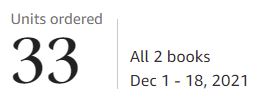
At midnight Tuesday morning, my book went out to all 21 people who had preordered it, and I officially had my first sales. On Tuesday, I posted all of the social media images I created last weekend for the launch, and I am up to 33 orders total. I am excited about this, as only about 15 are from close friends and family. That means between the additional orders and ARC readers, more than 20 others will find a source of entertainment in my work.
New author, new series, great support!
Out of all the social media platforms, Nextdoor.com came in as the surprise winner for introducing random people to my book. The neighbors on the site jumped in with congratulations, the ones who enjoy fantasy checked out the link, and many bought it. That level of local support is incredible, and I was overwhelmed by all the people reaching out. There are still many people in my various circles, including this one, asking about the paperback version. I will reach out again when that is finally available.
Still Work to be Done
I am actively working on the paperback formatting, and on Thursday, I had some professional photos taken so I could use something other than a Facebook picture on the back cover. The photoshoot also marked the end of my publication buzz. For a good 36 hours, I was riding a wave of giddiness, grinning, and dancing around the house. Then it crashed.
You know it will probably not happen, but a part of you still dreams about magic, instant success. When it does not work out that way, the part of you that dreamed is disappointed, and you have to rely on your logical side to continue celebrating the small wins—did I mention 33 orders?—and remind yourself that you planned for this and know what to do.
I have an Amazon-sponsored product ad running. It is generic, so I’m trying to use it to see what keywords I might target or avoid targeting. So far, I have had a 0% conversion of clicks to sales, which does not help with any decision-making as far a keyword goes. However, that 0% is on a total of only six clicks, so I will not worry just yet. I also know that I will likely have a greater chance of conversions once the second book is out. Many people are reluctant to start a series this early into its release schedule.
So, I will keep writing and putting in the work. I will adjust advertising as insights emerge. I will continue to post about my books and my cats on social media.
You can find the book at this link, and it does have the “look inside” feature now that it is no longer in preorder. I’m targeting having the paperback available within a couple of months, so I plan to include a signed paperback giveaway raffle in my January newsletter. If you are interested in entering and have not already signed up, you can do so below or from my home page.
Thank you for all of your support, and here’s to many more posts and looking forward to the release of book number two!
Newsletter Sign-Up
Processing…
Success! You're on the list.
Whoops! There was an error and we couldn't process your subscription. Please reload the page and try again.
This series is based on an odd dream I decided to turn into a short science fiction story for the blog even though I usually write fantasy. I’m not doing any beta read revisions on these, so they will read like the draft version they are. These will just be fun little shorts between other posts.
If this is your first time coming to the story, you can find earlier posts at the links below, and I’m tagging them with the Dream Journal tag if you want to search.
Velocity was deceptive beyond Earth’s atmosphere. With no scenery flashing by, my movement seemed minimal relative to the gargantuan spacecraft. The deceleration was noticeable, though. As I passed into the docking bay, a force grabbed my chutes, pulling them to the side as I plummeted toward the landing net. With loose legs, I crumpled into it, pressing flat as the net worked to halt my momentum.
A faint blue glow enveloped me as the net stretched deep into the bay. The force field did not suddenly snap back like a physical net, shooting me in the opposite direction. Instead, it eased gradually into a neutral position and activated the “sticky” property to maintain a slight pull toward the net.
I hit the button to start retracting the ascent chutes while the net was still rising. By the time I could stand, everything was away and I was ready to proceed. The net anticipated my actions. Each time I raised my foot, the net illuminated a step in the right direction with the same soft blue glow. The sixty seconds between each lift takeoff allowed enough time for these landings.
“Welcome Bitsa,” Flash greeted me as I passed through the airlock.
Flash was Tryss’s second-in-command. He was 5′ 2″ with dual citizenship in Korea and Norway, and he had a lean build that was all muscle, maintained from his days as a university gymnast. Flash’s real talent, though, was in programming. He could hack, counter-hack (I’m pretty sure that is a thing), and finesse systems faster than most anyone. It’s why he picked his call name, “Flash.”
Mine is Bitsa. My brothers used to joke about how I was always messing around with “bitsa this and bitsa that.” I took apart more of their tools and toys over the years than any of us remember. It was no surprise when I went into engineering, and I thought it was fun to turn that family saying into my call name when I could finally select one for myself.
“Thanks, Flash,” I replied. “Are we still clearing this spire?”
He nodded. “About half-done, so we are ahead of schedule. Take Lima-group as planned, and I’m still sending the new kid your way when he drops.”
My previous robotics partner was recently promoted out of the squad, so our latest addition was assigned to me more often than not.
I smirked at Flash’s tone. “Yes, sir.”
Grabbing a charged energy pistol from the bay armory, I headed toward lima-group.
Each spire had the same layout, with sections spiraling from the tip toward the join alphabetically. The sections each consisted of ten floors laid out in alphanumeric grids. Our docking bay was in golf-group, which meant I had four sections to travel to reach Lima.
The hallways lit up in anticipation of my presence and darkened behind me as I passed. The soft light might be easy on my eyes, but it was very sterile. When the manned mission staffed up, the walls and ceilings would show images of stained glass, murals, and other art to lighten the austere atmosphere. All of those extras were not operational for our little repair visit. I only saw a soft white light and silver-grey paneling.
As this spire would be our initial base of operations, my current task was to clear lima-group room by room, looking for anomalies. If there were any glitches here, we could focus on those closest to us first. We were not expecting any. So far, all issues noted by ground operators were in the sphere, but our orders were to take no chances.
Arriving at lima-group, I used the lift to start on the top floor. I stepped into each room to activate the automation and took measurements of all life-support controlled factors. It was tedious, boring, rote, repetitive…and I ran out of synonyms before I ran out of rooms to step into and out.
“Bitsa,” Flash’s voice came over the comms, “Juicy has dropped. What’s your twenty?”
I stepped out to confirm based on the hall signage.
“Copy Flash. I’m at Lima, floor three, grid papa-zero-eight, moving in alpha vector.”
“Copy, Bitsa. Juicy incoming.”
I could hear Juicy’s groaning sigh in my head, and I grinned to myself. He hated our team’s probationary name more than most. It would be about five minutes before he arrived, and I was not going to extend this lovely assignment by waiting around.
Door.
Door.
Hallway.
Door.
Door…Open door? My pulse jumped.
Not creepy at all…
I tilted my head and looked at the crack in the doorway at the end of this hallway. Lights flickered beyond as the automation triggered them in anticipation of my entrance, but I stopped short.
“Flash, Bitsa here.”
“Hold, Bitsa, drop in progress,” Flash replied to my call, so I waited.
The wait was no more than thirty seconds. “Bitsa, go.”
“I have a glitch at Quebec-one-zero” I reported. “Manual door with an automated lock is open with lights in the area flickering.”
“Copy, Bitsa. Mark on our map and proceed with a preliminary investigation.”
“Understood.” I marked the location on my HUD and looked at the door.
My pulse kicked up further, and a shiver went down my spine. It was just a door and some malfunctioning lights. This was no big deal. Right?
I closed my eyes and silently cursed Big Ben, my eldest brother, for making me watch that sci-fi horror movie with him the day before this mission. Abandoned spacecraft? Check. Flickering lights? Check. Monster, alien, ghost, or psychopathic crazy person jumping out to kill me? I really hoped not.
I’m a rational person. There is no way my heart would be pounding like this if the movie had not put such thoughts in my head. It was just a glitch, a malfunction. I could handle a glitch. I could fix a malfunction.
Taking a deep, calming breath, then another, I did a little body shake to settle my nerves and reached for the handle.
As of today, December 4th, there are less than ten days until the official release of my first book. Also on today’s agenda is sending out a reminder to my ARC readers that they should be downloading their copy so they read it in time to get a review posted in that first week of release (hopefully).
For the last week, I have been looking into creating some social media images to post in advance and on the day of release. Right now, I am playing around with Canva’s free version. You can see some of the preliminary results as the cover image for this post as well as here:
Posted on Instagram with hashtags. One like from a random person? I call that a win!
I’m enjoying the program so far. It is easy to use and does a great job of providing a color palette that coordinates with any images I upload rather than making minor adjustments constantly until it is what I think looks good enough.
Paperback Version?
Yes, I am now also looking at the paperback version process, and it is just as complicated as I imagined it would be. As I don’t think I’m going wide distribution at this stage, I’m probably going to use the KDP cover creator to use my ebook cover and use a solid color for the spine and back. I might get fancy with a future release, but I have already spent a fair bit of money on this whole endeavor.
The other piece I waffled on was trim size. I usually bought mass-market paperbacks, so all of the books on my shelf were pretty small. If I went with that size, it would mean more pages and, therefore, more expensive to print while simultaneously appearing cheaper. Online guidelines are somewhat helpful, but this morning we went to the local bookstore (B&N) to see what fantasy authors are publishing trade paperbacks at these days for both trim size and price.
Based on my quick assessment, this is either 5”x8” or 5.5”x8.5” with a price range between $11.99-$21.99. The higher end of that range was for well-known or currently trending authors and series. I have decided to try 5.5”x8.5” and $12.99. We will see what the author test copy looks like once I put it all in the system and order one. I think I also need to purchase a barcode for this ISBN to put it on the cover, but that will be part of my final paperback research.
In Other News
We are going to have five weeks between the D&D game this week and our January session, so I’m in the process of setting up a little Jeopardy trivia game to play via Discord between sessions to keep info top of mind for everyone. I have set up the questions and the reward system. It is just for fun, but I’m hoping everyone finds it engaging and informative!
Our little tree is up. I wonder how long before one of the cats swipes the first ornament off.
We are hosting a little potluck for my immediate family in a couple of weeks. It is something we do every year to include my grandparents. We skipped it last year for obvious reasons. Everyone is protected now and being very careful, so we are moving forward with it for 2021. It will be good to have our little group together again.
Next week for the blog, I’m debating talking more about the imminent publication or sharing the next installment of my dream story. Time shall tell! I hope you are all having a great holiday season so far!
Welcome back to my dream story! As a reminder, this series is based on an odd dream I had a bit ago. More details stuck with me than usual, so I decided to turn it into a short science fiction story for the blog even though I usually write fantasy. This one has a bit more exposition to it.
I’m still not doing any beta read revisions on these, so they will read like the draft version they are. These will just be fun little shorts between other posts.
If this is your first time coming to the story, you can find part 1 at the link below, and I’m tagging them with the Dream Journal tag if you want to search.
At Tryss’s command, I hit the button on my interface and tucked my chin, bracing for what was next. The first ascent chute deployed, yanking on my suit and rocketing me upward. While the suit took some force from my body, it was still similar to what the astronauts felt back when they took shuttles into space.
The ascent chute itself looked like a parachute made of golden lace, but that lace was not fabric. Thousands of solar-powered AG filaments connect in a flexible web that is stronger than steel. Once deployed, the filaments charge and react to gravity the same way similar magnetic poles react to each other. The filaments, once charged, are repelled from the Earth’s center of gravity.
The force and speed driven by the repulsion are extreme upon initialization. Then, like a magnetic force, the impact dissipates with distance. This dissipation is why we have three ascent chutes in our equipment. One is strictly a redundancy, but a second chute is necessary to leave the atmosphere and navigate once in orbit.
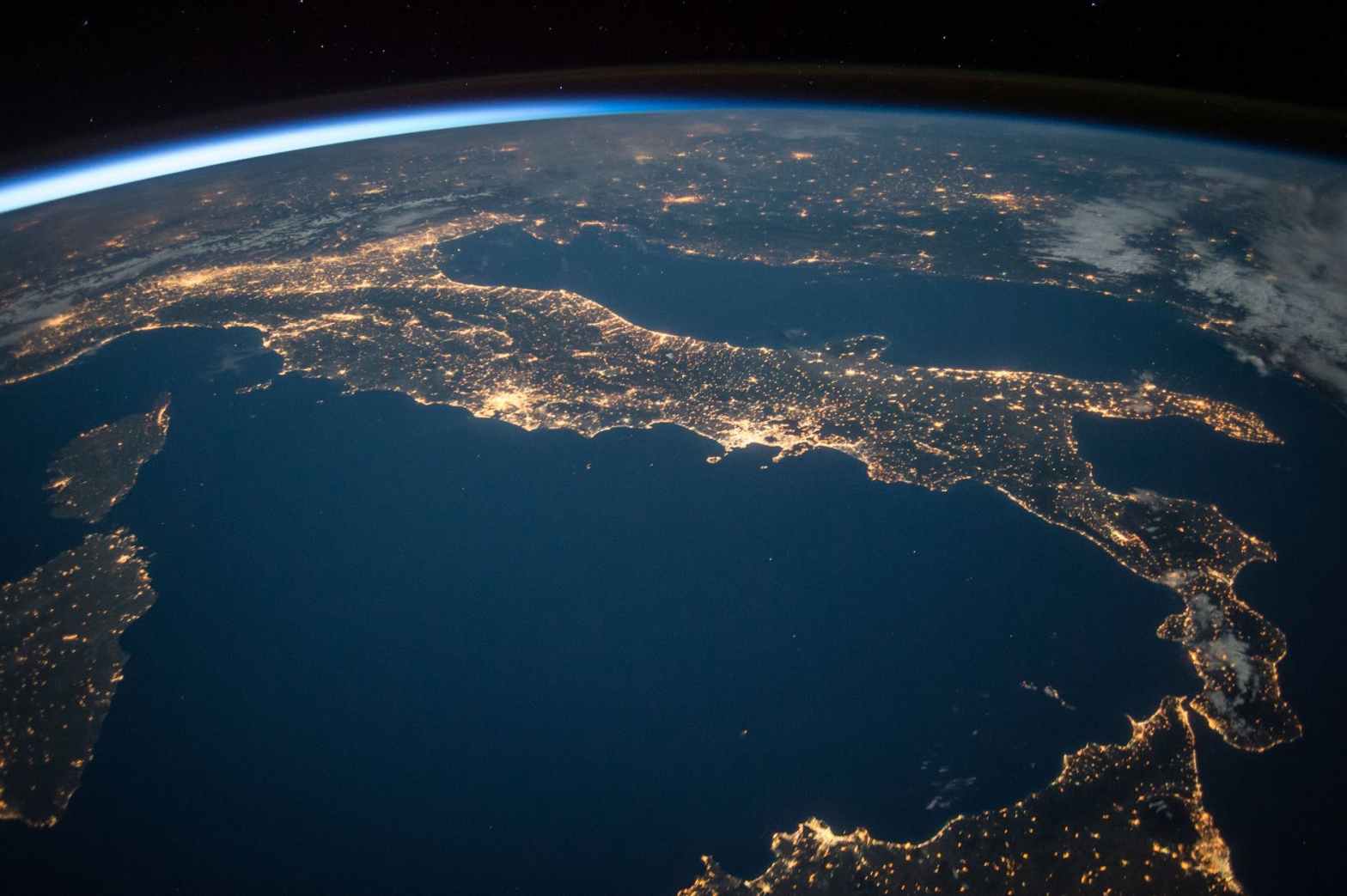
The extreme forces lasted for about five minutes before easing enough for me to look around. Earth’s curvature grew more distinct even as other details faded with my rising altitude. It was a sight that never failed to take my breath away. The world glowed like a living blue marble, giving me a contradictory sense of enormity and insignificance. I could reach out and hold the world in the palm of my hand.
What will it feel like to be the first humans to leave our solar system? I wondered. What would it be like to watch the world fade until it was nothing in the vastness all around you?
That was not my mission. I wasn’t selected for the first flight, but with any luck, I would maintain my spotless record and be on the second mission once it was approved and ready.
My HUD flashed with a thirty-second countdown, and I brought my mind back to the mission. At this point, without a second chute, I would see my speed drop until I fell into a stable orbit around the planet unless I reduced the charge flowing to the filaments and allowed my orbit to degrade. As my objective was further out, the second chute would deploy on this new mark.
The HUD flashed again at fifteen seconds, and I prepared for the second chute deployment. I could already see my squadmates ahead of me navigating with their two chutes on the target trajectory. Below, a line of chutes followed me up like a migration of glowing golden jellyfish.
Another flash and my second chute deployed, unfurling quickly to catch the sun. It filled with solar energy as a sail with the wind and pulled tautly against the connecting lines. A current shot through the lines for both chutes, making them solidify. With easy hand movements, I could now shift the position of each chute relative to myself and each other.
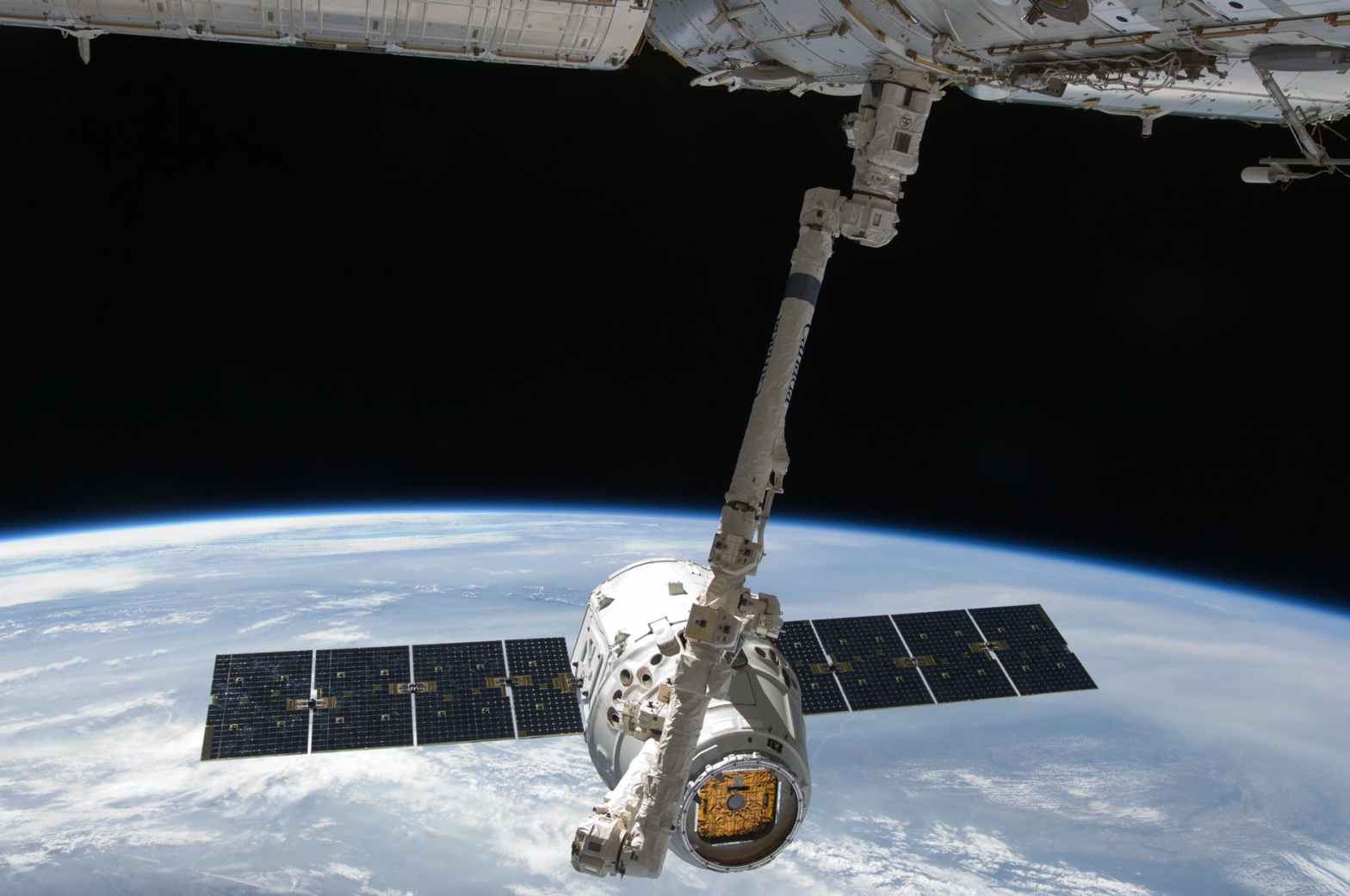
Using my HUD, I triangulated my target and shifted my trajectory to intercept. It was still too distant to make out more than a fleck flashing silver in the distance. Unlike my training lifts or my one mission to the space station, this one would take me to Inspiration. Despite not being able to see the ship yet, I felt my excitement grow once more.
Inspiration was the first human vessel capable of interstellar travel. At least, it will be capable once the final modifications, uploads, and tests are completed. The massive construction project was a cooperative effort between fifteen countries and more than twice as many corporations and research organizations. It began nearly a half-century ago with a group of scientists living around the world. They all met regularly online as a club to exchange ideas and build upon those ideas together.
Some of those scientists had the right connections to politicians and investors. Some had connections to patent and international lawyers. What could have ended in unrest, conflict, or even war, was instead the trigger for an unprecedented level of international cooperation. The standard of living rose globally, driving increases in education and freedoms in nearly every corner of the world.
Earth was in a scientific Renaissance, and this ship was the guiding light. Initial construction happened in pieces around the world for the ship and all of the assembly robots. When they were finally ready, AG platforms lifted and maneuvered every piece into place. For the next twelve months, the bots and remote operators joined the sections and installed final components.
Since that time, six supply ships with additional materials and installation bots had docked and delivered supplies. One month ago, ground control powered up Inspiration on a live broadcast to begin live testing on the software. Celebrations sprung up around the world and lasted for days. When the initial tests cleared successfully, plans for an unmanned, automated test drive moved into their next phase.
It would be a short program to initiate travel to open space, scan the area, then jump back. The entire process was expected to take less than four hours and bring back a wealth of knowledge. The first target date for a manned trip would be six months from that initial jump, pending a “go” from all departments based on the initial data, including analysis of the physical impacts on the mice going on the three-plus-hour tour.
Then, a week ago, there was a glitch detected by a tech monitoring some of the programs, a malfunction in a system. A second problem followed, then a third, and all ground investigations came up empty as to the cause of the malfunctions. All the operators, bots, and measures read as though nothing was wrong, but the glitches continued.
Yesterday, my unit was activated, and a lift was authorized. We specialize in space repairs, and three of my squadmates were members of previous supply drop checks on Inspiration, including Tryss. Our mission was to perform a complete system check, hardware, and software, looking to isolate what could be causing the problems. If we needed to dismantle entire sections of hardware to find a shorted wire or bent screw, that is what we were authorized to do. We had two days to find an answer and a solution, or the test flight would be postponed.
“Mark One reporting in. G-9 docking bay identified and perimeter guiding lights are lit. Report green for dive.” Ace’s voice came over the mic in my helmet.
“They called it a dive because docking during a lift was a little like cave diving. You had a docking bay that was effectively a black hole in the ship surrounded by a circle of lights”
They called it a dive because docking during a lift was a little like cave diving. You had a docking bay that was effectively a black hole in the ship surrounded by a circle of lights. You shot for the hole, dove in with your chutes, and a magnetic field in the void caught your chutes and automatically guided you down to a force field net where you could retract your chutes.
The net had some give to it in case there was a malfunction and you came in hot. It would catch you gently and stabilize. When you cleared safely, the net glowed gently under your feet and in a path guiding you to the airlock.
“You have a go, Mark One,” Tryss replied to Ace.
The daunting responsibility of our mission hit home for me as the ship loomed closer. A large sphere made up the ship’s core, with starbursts spearing out of it like rays of the sun. Each “ray,” known officially as “spires,” could be detached and independently navigated or used together to navigate the ship as a whole at sub-light speeds. The center of the sphere held the interstellar drive. From afar, it looked like one of those old spikey ocean mines, but that was before you realized the gargantuan size of the ship.
As I passed along the nearest spire, the golden glimmer of my chutes faded. This mini-ship was the size of a skyscraper, and it blocked out the light of the sun at this angle. The faint glow of the ship’s exterior lights was dark in comparison, but it would make identifying the docking bay easier.
Beyond my chutes, I could make out the ring of lights circling the pit. The HUD’s infrared showed me where my unit was gathering one by one. I adjusted my chutes a final time, aiming for the darkness ahead. With a final nudge, the ship swallowed me whole.
I’m about to show how much of a social media novice I am with this next revelation, but here it goes. Do you want to know an important piece of social media exposure? The answer is hashtags. You need to include hashtags in your Twitter and Instagram posts so that more people see them when they look at or search on said hashtags. Most of you presumably already knew this, but I have never been a great social media user. My Space was “the thing” to have when I was in high school, and I never had an account. Self-promotion and sharing are not natural for me, and I am finding out new things every day.
One (helpful) social media tip I will share from the Facebook author groups I am part of is: be cautious of the people who contact you to promote your work. When I started using hashtags related to my book, I immediately received a handful of messages asking me to follow this and DM to “promote” through them. Someone even reached out with an offer to review my book on their account.
All of this sounded great. I’m trying to get the word out about my work and get it noticed on social media. All they wanted was $20 here or $40 there. Simple. Right?
The more I look into this, the sketchier it appears. Many of the promotion Instagrammers have followers and likes inflated by bots, and when you ask about their returns and guaranteed clicks, they get dodgy. In some cases, I have heard, they threaten to bomb your book with 1-star reviews if you don’t end up promoting with them. I am now hiding all promote or DM comments on Instagram to try to limit or prevent these.
On the reviewer side, you have to be very careful about not doing paid reviews. There are some editorial reviews where this is allowed, but this can get you banned from Amazon. They frown heavily on paid reviews, so before you pay anyone, make sure that you know exactly what they are offering, and you read all the fine print for Amazon and other distributors and sites you are on. Fortunately, I did not agree to pay anyone.
ARC Readers
This is a good segway into the concept of ARC readers and how they are different than paid reviews. First, you should never pay ARC readers. That is how it becomes a paid review rather than an honest review. ARC stands for Advanced Review Copy, and is a copy of your book that you provide, for free, in advance of the release date so that reviewers can read and post their reviews in advance of or on the date a book releases. You often “provide the book for free in exchange for an honest review.”
What this means could be a myriad of different interpretations. I have heard some authors become upset if someone who receives an ARC does not finish the book or post a review. I have done some ARC reads and reviews myself for some of the groups I am on, and I prefer the Readers Favorite approach:
“We only post 4- and 5-star reviews. If an author receives a poor review, we provide private constructive criticism to the author instead. We were the first book review company to not post negative reviews because we are in the business of helping authors, not hurting them.”
Readers’ Favorite Website
The groups I am part of are for indie authors like me, and my goal is to be supportive, not hurtful. I will reach out on 3-star reviews to see if the author wants me to post, but for 1- or 2-stars, I generally will not post those when something is below 50 total reviews. It is my philosophy and not something I push on my ARC readers. I give them a free copy for an honest review, so I need to be okay with their choices in this. It’s the “honest review” part; it means I’m not influencing them by payment or intimidation. What a reviewer posts, is what that individual thought of the book.
Some helpful tips and resources for ACR readers:
If you receive a free book in exchange for your review, you should call that out in the review, so that others reading your review are aware of the facts.
ARCs are important because almost everyone looks at the star rating before they look at the description. You want as many (hopefully good) reviews posted on or around the day of release as possible. The number of reviews also matters. I can’t remember the exact numbers, but I think it is below 20 reviews readers dismiss even a good rating, and Amazon does not start promoting books outside of paid advertising until a book has around 50 reviews. So, the next time you enjoy that book you just read, take a minute to rate it for the author to give them some applause for that artistic performance.
Invitation to Action
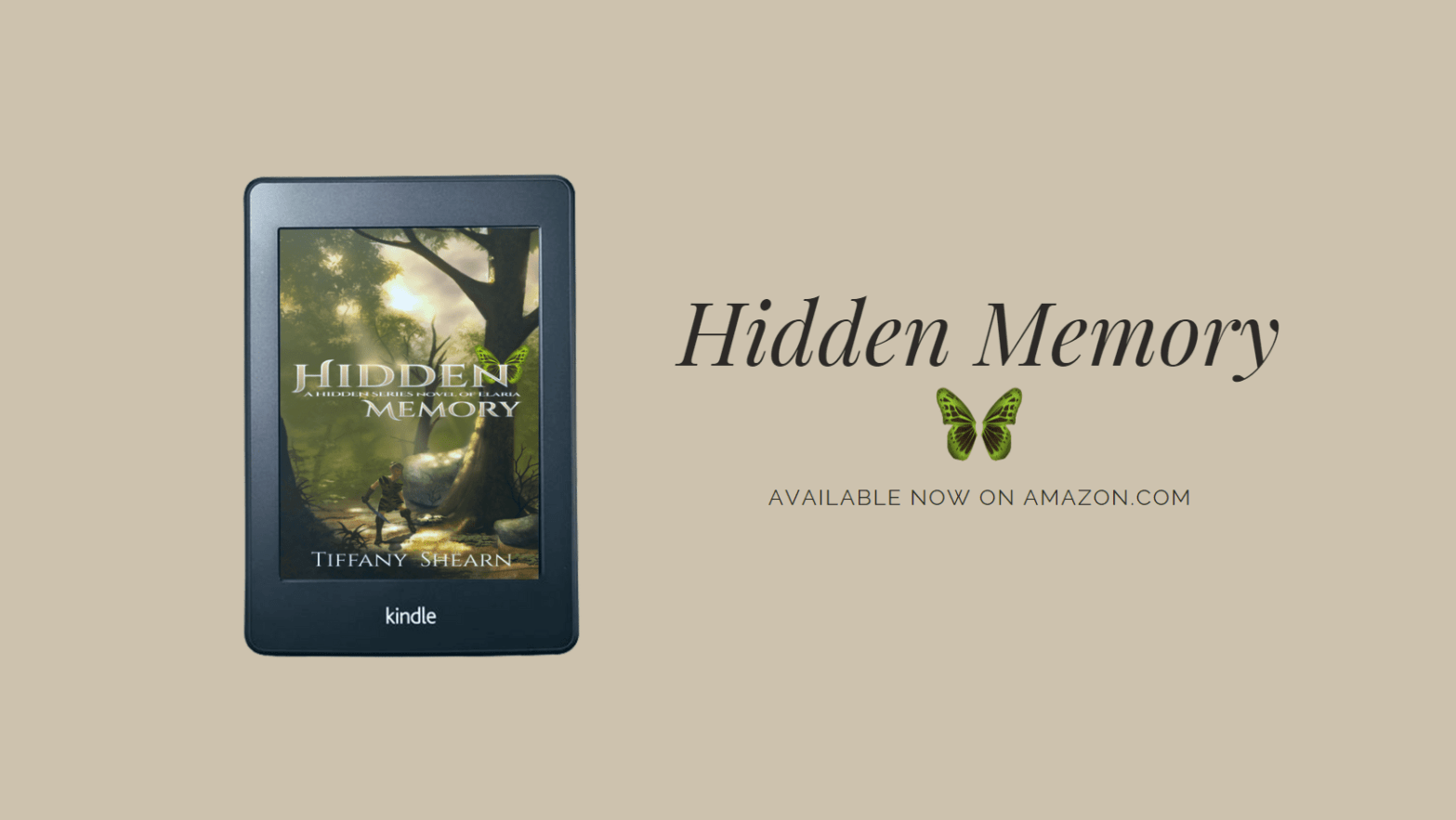
This week I sent out my first invitation to ARC readers with their copy of Hidden Memory, and I am now going to make an offer to my early blog followers. I know some are friends and family who have already or are planning to buy the book if only to support me. I love and appreciate that support.
If you would like an ARC copy of Hidden Memory free in exchange for an honest review, I invite you to comment below, sign up via this form, or reach out to me. You will be signed up for the newsletter to receive emails from me, but I can then send that digital copy out to you. You don’t need to follow my philosophy above, but I would ask you to reread the book description to make sure it sounds like something you would enjoy before signing up.
Whether you sign up or not, I thank you all for your support and engagement throughout this year. Less than four weeks to go!




 Tiffany Shearn
You must be logged in to post a comment.